
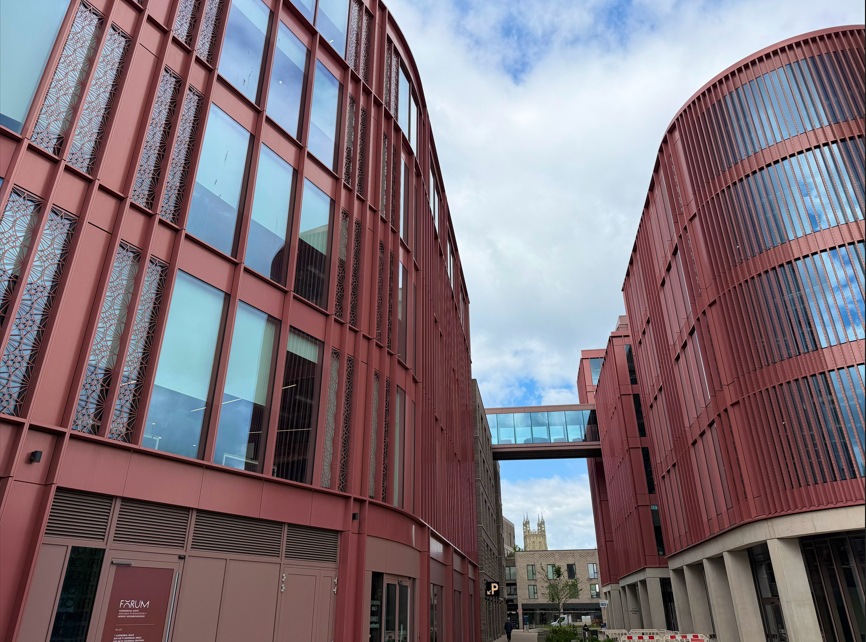
Once known more for its historic docks, Gloucester is attempting to reshape its identity through one of the city’s largest regeneration projects in recent history: The Forum.
Located in the centre of Gloucester as part of the wider King’s Quarter redevelopment, the £150 million expansion combines office space, hospitality venues, co-working areas, restaurants and a luxury hotel in an effort to transform the city into a hub for digital and cyber businesses.
Walking through The Forum today, the contrast between old and new Gloucester is immediately visible.
Glass-fronted buildings, modern interiors, and busy cafes sit only minutes away from the city’s historic streets. Office workers move between meetings while students and visitors pass through the open public spaces. The development feels polished, ambitious, and distinctly different from the Gloucester many residents have grown used to.
But behind the new exterior lies a bigger question.
Can The Forum truly deliver the economic and social transformation the city was promised?
The project was designed to attract technology, cyber-security, and digital companies to Gloucester, helping create jobs and increase investment in the city centre. Those backing the project believe that the development is exactly the kind of regeneration Gloucester has needed for years.
Residents of The Forum have been vocal in their admiration for the project.
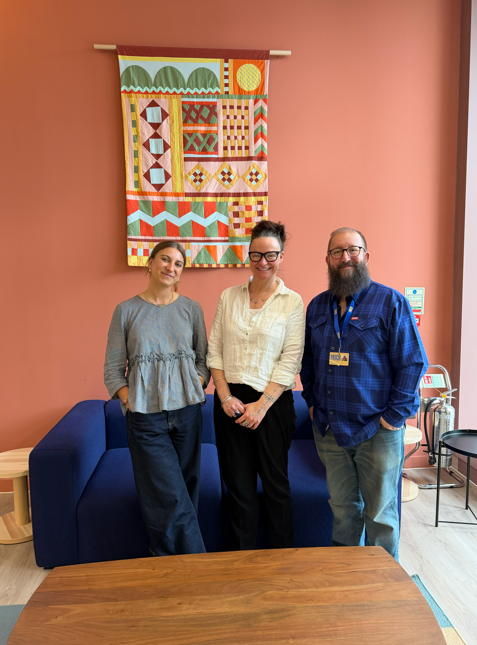
Laura Griffiths from the team at Patch, a flagship co-working and community space there at The Forum, says that ‘it’s a great success so far and it’s had a huge transformation in just 6 months.’
Business groups also hope the project will increase footfall and encourage more people to spend time in the city centre, particularly in the evenings. The opening of Hotel Indigo, alongside new restaurants, bars and event spaces, is expected to boost tourism and business travel into Gloucester too.
However, public opinion remains divided.
Some residents questioned whether the scale and cost of the project can truly be justified, particularly while parts of the office spaces remain unoccupied. Others argued that while the buildings themselves are impressive, the development still feels disconnected from Gloucester’s tradition character.
“It’s too big,” one resident commented, also saying that it looks out of place and too modern. He added, “most of it’s empty…(it’s) not doing very well at the moment, not at all.” He believes it’s not beneficial to Gloucester ‘at all.’
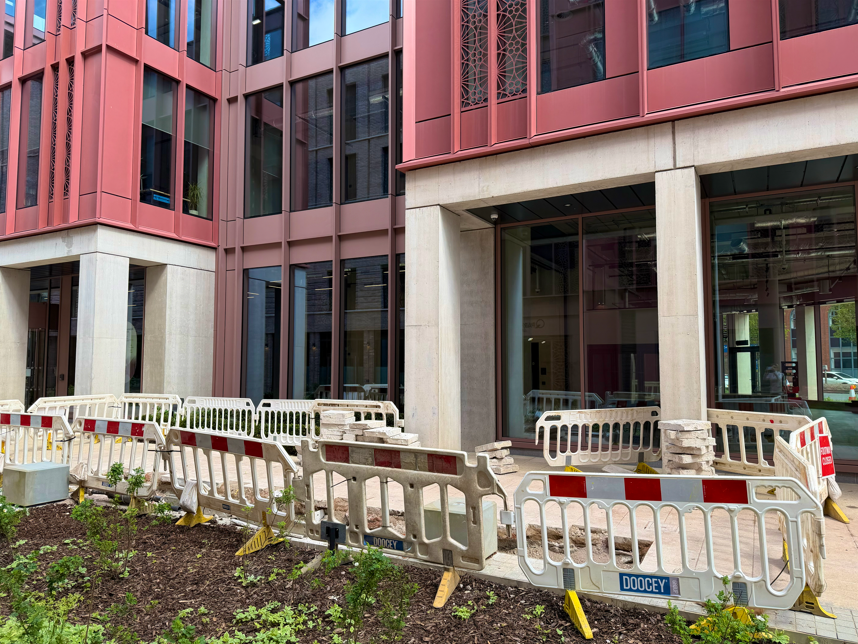
That tension between ambition and reality appears to define The Forum’s current position. While the infrastructure is complete and businesses are beginning to move in, the project is still in the process of proving itself.
Andy Barr, a self-employed PR entrepreneur, said, “(The Forum) doesn’t deserve all the negative comments that they’re receiving. This will really help Gloucester’s economy in the long run.”
But ultimately, its success will likely depend on what happens over the next few years. Whether companies will continue relocating into the city, whether local businesses will feel long-term benefits, and whether residents begin to see The Forum as more than just a symbol of regeneration.
For now, it stands as both a statement of intent and a work in progress.
What is clear, however, is that Gloucester is changing.
Whether The Forum becomes a centrepiece of a successful transformation, or simply an ambitious experiment may depend not on the buildings themselves, but on the people and activity that fill them.
“I keep hearing so many people say that when they come here, they feel like they’re in London,” says Laura.


